Amos 6:1a, 4-7, Psalm 146 (145): 7-10, 1 Timothy 6:11-16 and Luke 16:19-31
A Heart that Sees: Living with Compassion in a World of Indifference
Brothers and sisters in Christ,
Last Sunday, we listened to the parable of the dishonest steward from Luke 16:1–13. Jesus did something unexpected—He praised the cleverness of a steward who acted wisely, not because of his dishonesty, but because he prepared for the future with foresight. The lesson was clear: if a dishonest man knows how to plan for tomorrow, how much more should the children of light prepare for eternal life. We were challenged to ask ourselves: how are we using our resources—our time, our gifts, our wealth—not just for earthly security, but to build treasure in heaven?
That message leads us directly into today’s Gospel, which in many ways feels like a continuation of last week’s warning. Today, in Luke 16:19–31, Jesus tells the parable of the rich man and Lazarus. It is a story that pierces through our comfort zones, a story that makes us ask: Do I have eyes to see the Lazarus at my gate?
The Gospel Story
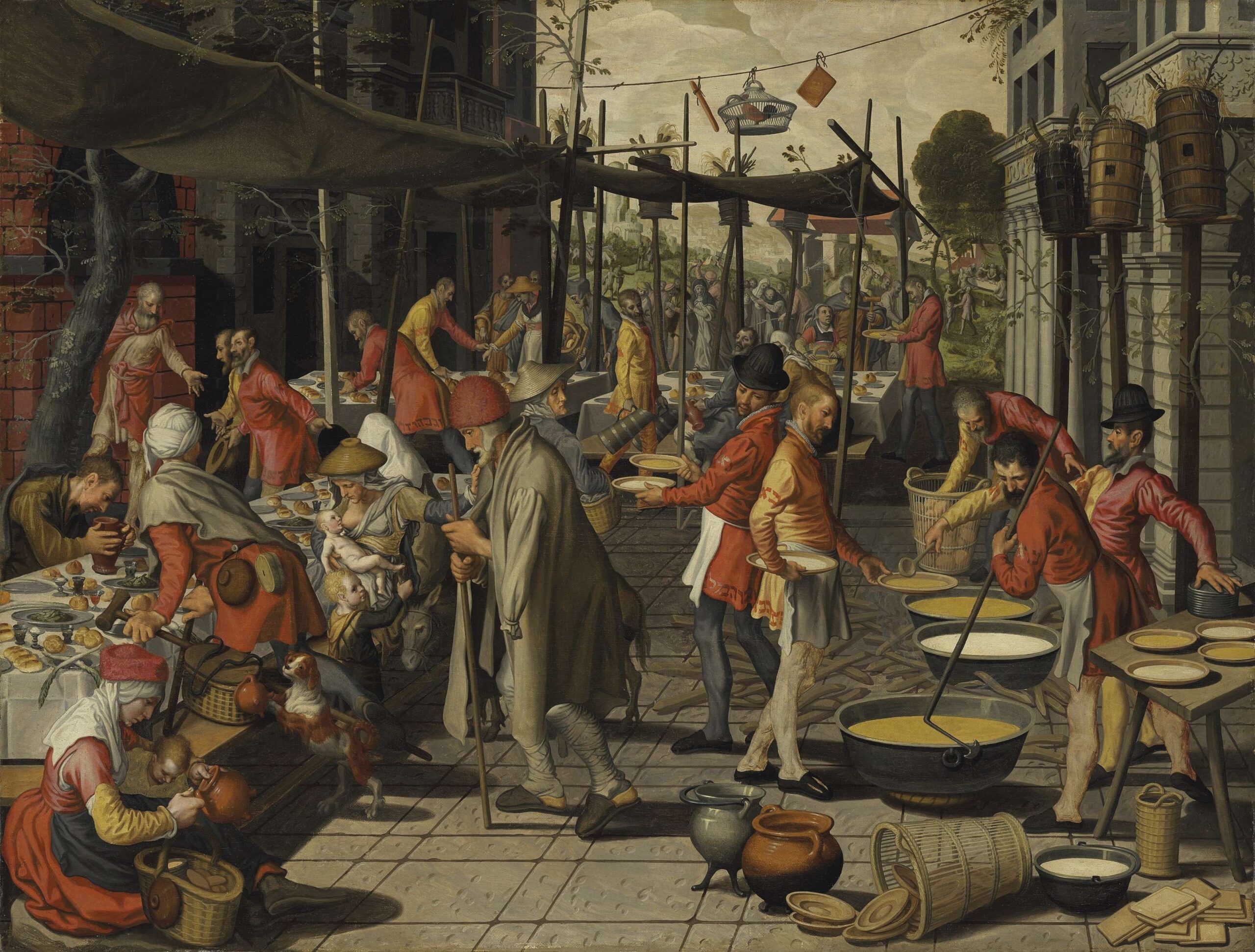
We hear of two men. One is nameless but described as rich, dressed in purple and fine linen, feasting sumptuously every day. The other has a name—Lazarus, a poor man covered in sores, lying at the gate, longing for scraps. Dogs licked his wounds, a sign of his complete helplessness.
Both men die. Angels carry Lazarus into the bosom of Abraham—an image of eternal comfort. The rich man finds himself in torment, separated by a great chasm, begging for relief. But it is too late. His wealth, his indulgence, and his blindness to the suffering at his doorstep have sealed his fate.
The Gospel is blunt: the problem is not that the rich man was rich, but that he failed to see Lazarus. He did not even notice him. His sin was not hatred, but indifference. And in the eyes of God, indifference can be as deadly as cruelty.
Our first reading from Amos (6:1a, 4–7) gives the same warning. Amos cries out against those who are “at ease in Zion,” lying on ivory couches, eating the best of the lambs and calves, singing idle songs, drinking wine from bowls, but not grieving over the ruin of the poor. The prophet thunders that such people will be the first to go into exile. In other words, luxury without compassion leads to downfall.
Psalm 146 reminds us who God is: the defender of the oppressed, the one who gives food to the hungry, sets prisoners free, opens the eyes of the blind, and raises those who are bowed down. This is the God we worship—a God who takes the side of the poor.
And then, in the second reading, Paul urges Timothy to “pursue righteousness, godliness, faith, love, endurance, gentleness.” He calls us to fight the good fight of faith, to take hold of eternal life. It is not enough to avoid evil; we must actively pursue virtue and embody it.
What is Jesus teaching us with this parable?
First, eternal destiny is shaped by how we live now. The rich man ignored Lazarus in life, and in eternity, he experiences the consequences of that blindness. As Jesus says elsewhere, “Whatever you did for one of the least of these, you did for me” (Matthew 25:40).
Second, wealth in itself is not condemned, but the misuse of wealth is. In fact, wealth carries responsibility. When God blesses us, it is not just for us, but for others. The rich man was not condemned for having purple robes and banquets. He was condemned because he walked past Lazarus every day and did nothing to help him.
Third, the parable shows the permanence of our choices. The “great chasm” in eternity is the chasm we build here on earth—between ourselves and our brothers and sisters, between ourselves and God. If we ignore the poor now, we risk finding ourselves far from God later.
Making It Alive Today
Let us bring this home. Who is Lazarus at our gate today? Perhaps it is the homeless person we pass on the way to work, the refugee family struggling in silence, the neighbour battling loneliness behind closed doors, the parishioner who longs for a kind word. Lazarus may not always come with sores and hunger; sometimes Lazarus is the teenager weighed down by depression, the single parent juggling two jobs, or the elderly who have been forgotten.
We live in a world where it is so easy to be like the rich man—distracted, comfortable, concerned only with our own needs. Indifference is perhaps the greatest temptation of our time. We scroll past suffering on our phones. We change the channel when the news is too painful. We convince ourselves someone else will take care of it. But the Gospel challenges us: a Christian cannot be indifferent.
This is not a new theme. Remember the words of Isaiah: “Is not this the fast that I choose: to loose the bonds of wickedness, to share your bread with the hungry, and to bring the homeless poor into your house?” (Isaiah 58:6–7).
Or think of James who says: “If a brother or sister is poorly clothed and lacking daily food, and you say, ‘Go in peace, be warmed and filled,’ without giving them the things needed for the body—what good is that?” (James 2:15–16).
The Scriptures consistently remind us: true faith must be lived in love, especially towards the most vulnerable.
A Story to Reflect On
Let me share a small story. A priest once visited a wealthy parishioner. The man took the priest upstairs and showed him his vast land from the window. He said, “Father, all this is mine.” The priest quietly took him to another window that faced the street. There is a beggar sitting by the roadside. The priest pointed and said, “That man is also yours.”
The rich man was shocked. The priest continued: “God gave you land to cultivate, wealth to manage, and blessings to enjoy. But he also gave you that poor man to love and care for. He belongs to you just as much as your land does.”
That, my friends, is the message of today’s Gospel. Lazarus is given to us. What we do with him is the measure of our faith.
Practical Challenge
So how do we live this?
• Open your eyes this week. Ask God to show you the Lazarus at your gate.
• Do one concrete act of mercy: a visit, a meal, a phone call, a donation, a word of encouragement.
• Re-examine your lifestyle: am I feasting while others are starving?
• Pray for a heart that sees, because indifference is healed only when God gives us compassion.
Conclusion
The Gospel today is not meant to scare us, but to awaken us. God does not want us to end like the rich man—blind, cut off, regretful. He wants us to share in His joy, to live with open eyes, open hands, open hearts.
Brothers and sisters, may we not be counted among those who “lie on beds of ivory” while ignoring the ruin around us. May we instead be like Timothy—pursuing righteousness, godliness, faith, love, endurance, and gentleness. And may we discover, in every Lazarus we encounter, the face of Christ Himself. Amen.