2 Samuel 5:1-3, Psalm 122 (121):1-2, 4-5, Colossians 1:12-20 and Luke 23:35-43
Christ’s Kingship in a Turbulent World
Today, as we close the Church’s liturgical year, the Gospel guides us not to a throne or worldly grandeur, but to Calvary—where our King rules from a cross. If we want to understand what kind of King Jesus is, we need to look there: showing mercy instead of demanding it; offering forgiveness rather than vengeance; and welcoming the lost, not condemning them.
When Pope Pius XI established this feast in 1925, the world was a challenging place, marked by uncertainty and anxiety. Mussolini’s Blackshirts were gaining a stronger hold on Italy, while Adolf Hitler was busy reorganising the Nazi Party after his failed attempt. Stalin was firmly establishing control over the Soviet Union, and throughout Europe, democracies were struggling, as nationalism grew louder than the Gospel. It was a time of great upheaval, yet the message of this feast offered hope and reassurance amid the tumult.
But political turmoil wasn’t confined to Europe; it was a global wave of unrest. In Africa, the people were enduring the hardships of colonial rule—countries like Nigeria, Kenya, Ghana, and South Africa all battling against oppression, segregation, and economic exploitation. Egypt was also facing instability after gaining partial independence. In Asia, China was caught in internal conflicts, while Japan was increasingly leaning toward militarism. Latin American countries such as Mexico, Brazil, and Argentina faced their own struggles with revolutions, corruption, and shifting dictatorships. Around the world, leaders often rose to power through fear, manipulation, or violence. Amidst all this chaos, Pope Pius XI urged the Church to boldly proclaim one eternal truth: Christ is King—over every nation and every human heart.
And sadly, his message remains relevant today. Our world continues to be unsettled. Wars persist in Ukraine and the Holy Land. Tensions escalate among global powers. Many African nations face coups, ethnic violence, and unstable governments—Sudan besieged by conflict, Mali and Burkina Faso experiencing military takeovers, the DRC grappling with unrest, Ethiopia recovering from war, and South Sudan yearning for stability. In the Americas, political polarisation intensifies. In Asia, clashes of ideology and ambition generate tension. A world that is anxious, divided, and wounded desperately needs a different kind of king.
The Scriptures today remind us who that King is.
In today’s first reading, Israel anoints David because he is one of them, a shepherd who will not rule from above but lead from among the people. True kingship begins in compassion, not superiority.
St. Paul offers a broader view, illustrating how Christ is “the image of the invisible God’ and the very heart of creation. He is the source of peace and the one who brings reconciliation to everything. His power is about restoration and healing, not destruction.
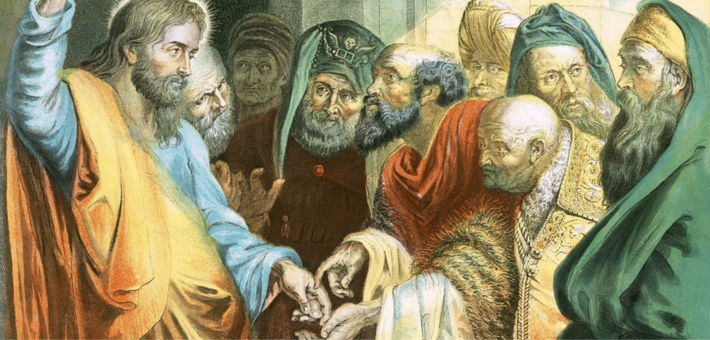
In Luke’s Gospel, Jesus’ kingship is revealed not through strength but through surrender. Around the cross stand three groups. The ordinary people watch with sorrow—confused, powerless, grieving. The religious leaders and soldiers mock him—some out of anger, others out of boredom. Then we see the two criminals. One curses Jesus; the other opens his heart and simply asks, “Remember me.” And Jesus, with the authority of a true King, grants paradise to a man who had nothing left to offer except trust.
This is our King. A King who forgives his executioners. A King who welcomes the undeserving. A King who breathes his last in confidence and love. Christ rules not from a palace but from the place where humanity suffers most. His crown is made of thorns; his throne is a cross; his power is mercy.
What Is Expected of Us as Christians Today?
If Christ is our King, then we cannot follow the politics of hatred, contempt, or fear. We cannot mirror the bitterness and division that fill our world. We are called to:
- Live under Christ’s rule of love. Let his compassion shape our decisions, our speech, our relationships.
- Be peacemakers. In families, communities, and nations torn by anger, Christians must choose dialogue over insult, forgiveness over revenge.
- Stand for justice. Christ the King defends the weak. We must work for fairness, dignity, and truth wherever we are.
- Reject false kings. Power, money, ideology, tribe, and party cannot claim our ultimate loyalty. Only Christ can.
- Show mercy. Like the good thief, people around us are broken and searching. Our calling is to offer hope, not judgment.
Lessons from the Feast of Christ the King
- True authority is service.
- Mercy transforms lives.
- Christ reigns from the cross—love is stronger than force.
- Hope is always possible, even at the last moment.
- Every Christian is called to lead like Christ—in humility, integrity, and love.