Isaiah 2:1–5; Psalm 122:1–2, 4–9; Romans 13:11–14a; Matthew 24:37–44
Come, Lord Jesus, Come
On a cold December evening, a young boy named Mateo sat on the front steps of his home, staring down the long street that disappeared into the dark. His father had been away for months on deployment, and though his mother tried to reassure him that he would be home for Christmas, Mateo found it hard to believe. Every night he waited, scanning the shadows for any sign of him.
One night, his grandmother stepped outside and sat beside him. Seeing the worry in his eyes, she handed him a small lantern and lit it. “Why do we need this?” Mateo asked. His grandmother smiled. “Because light helps us wait with hope. Every night you sit here, keep this lantern burning. Don’t look for your father in the darkness—look for him in the light.”
So he did. Night after night, Mateo kept the lantern burning bright. And although his father didn’t arrive immediately, something shifted—Mateo’s heart felt lighter, and his hope grew steadier. Then, one early morning near Christmas, Mateo saw a familiar figure walking up the street, gently guided by the glow of the lantern waiting for him.
On this First Sunday of Advent, we began with the story of young Mateo, sitting in the dark with a small lantern, waiting for his father to come home. What changed his heart was not his father’s arrival, but the light that helped him wait in hope. That simple flame pushed back the darkness and taught him to believe that what he longed for was on its way.
This is the spirit of Advent.
The word “Advent” originates from the Latin adventus, which means “arrival,” “coming towards,” or “approach.” Adventus itself derives from ad- (“to” or “toward”) and venire (“to come”). In Greek, early Christians used the term παρουσία (parousia), meaning “presence” or “coming”—a word employed in the New Testament to describe the anticipated return of Christ. Therefore, Advent is not merely a countdown to Christmas; it is a season of longing, of watching, and of leaning forward in expectation for the presence of God breaking into our world.
Today we light the first candle of Advent—the Candle of Hope. This first flame reminds us that hope is often small at the start. It represents those who wait in darkness—those longing for healing, peace, answers, strength, or forgiveness. It is the candle of people who believe that God is already on the way. This candle invites us to trust, to watch, and to walk in the light we have, even as we long for the fullness of the light to come.
Our readings today deepen this meaning. Isaiah offers a vision of a renewed world—a world where nations transform swords into ploughshares, where people walk in the light of the Lord, and where war is no more. It is a beautiful vision, but Isaiah speaks these words to a people surrounded by fear, confusion, and conflict. God does not say, “Wait until everything is perfect, then you will see my light.” No—He presents the vision in the darkness so that His people can walk towards it. Hope always begins this way, with a promise strong enough to guide us when life is uncertain.
The psalm today is a song of joy: “I rejoiced when they said to me: Let us go to the house of the Lord.” Advent hope does not dwell in silence. It moves our feet. It brings us into community. It gathers us around the presence of God, because we hope not alone, but together.
St. Paul reminds us that “the night is far gone; the day is at hand.” Advent hope is active, not passive. It awakens us. Paul says, “It is time now for you to awake from sleep.” Hope is not just waiting; it is choosing to live as if the light has already triumphed. It involves shedding behaviours tied to darkness and clothing ourselves with Christ.
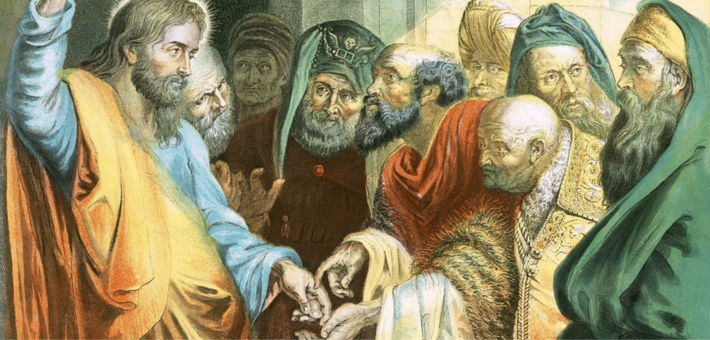
Finally, Jesus calls us to be prepared. Not anxious. Not afraid. But alert. Those in Noah’s time were caught off guard because they lived only for the moment. Jesus warns us not to drift through life half-asleep. Advent hope keeps our eyes open and our hearts ready for God’s arrival—in the ordinary and in the unexpected.
Lessons to Take Home
- Hope is a decision. We choose to trust God even when answers are slow.
- Hope grows when we walk together. As the psalmist reminds us, we journey as a community.
- Hope wakes us up. It calls us to live as children of the light, shaping our choices and our way of life.
- Hope expects God. Not in fear, but in joyful readiness. God is not far. He is coming toward us.
Let me end with another short story.
An elderly woman named Clara kept a single candle in her window every night in December. Her neighbour, David, once asked, “Why do you light it every year?” She smiled and said, “When I was young, my mother told me that every act of hope is a door for Christ to enter. This candle reminds me that even if the night feels long, Christ is already on the road.” Years later, after Clara passed away, David continued the tradition. When his young daughter asked why he did it, he repeated Clara’s words. And so, the light kept passing on, from one generation to another, each flame whispering the same truth: Christ is coming. Let His light find you awake.