Ezekiel 47:1-2, 8-9, 12, Psalm 46 (45):2-3, 5-6, 8-9, 1 Corinthians 3:9c-11, 16-17 and John 2:13-22
Being the temple of the Lord
Today we celebrate the Feast of the Dedication of the Lateran Basilica. Some may wonder why, on an ordinary Sunday, the Church invites the whole world to remember the dedication of one particular church building in Rome. But this feast is not only about a building. It is about the identity of the Church, the unity of believers, and the presence of God living among us.
The Basilica of St. John Lateran is the cathedral of the Pope as Bishop of Rome. Many people assume that St. Peter’s Basilica is the Pope’s cathedral, but St. John Lateran holds that role. It is the mother and head of all churches in the world. It is the oldest major church in the West, dedicated in 324, when Christianity was newly allowed to be practised openly. It became the centre of Christian life, worship, teaching, and unity. For many centuries, the popes lived there. This basilica reminds us that our faith is not something invented recently, but instead built on a long history, rooted in the apostles, and still united with the successor of Peter.
So why do we celebrate this feast everywhere, even far away from Rome? Because this basilica is a symbol of unity. When we honour the Lateran, we honour the unity of the Church, gathered around Christ. It is a reminder that we belong to something bigger than our own parish. We belong to the universal Church, spread across the world, made up of many cultures, languages, and peoples, but united in one faith, one baptism, and one Lord.
The readings today help us understand the deeper meaning of the Church and of our own lives as temples of God.
In the first reading from Ezekiel, the prophet sees a beautiful vision: water flowing out from the Temple, bringing life everywhere it goes. Trees grow along the banks. Their fruit never fails. Their leaves bring healing. The Temple is shown as the source of life for the world. This tells us something significant: where God dwells, life flows. Where the presence of God is welcomed, things grow, heal, and are restored.
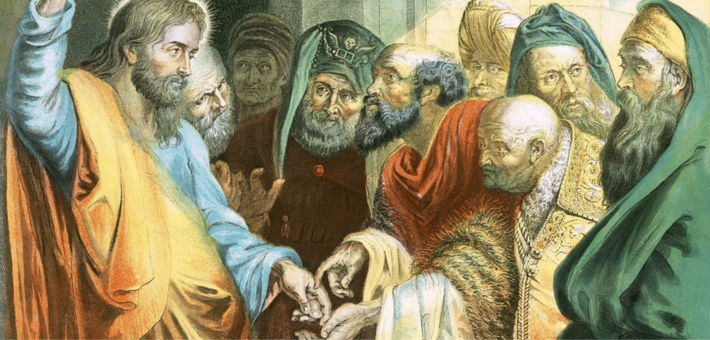
Then, in the Gospel, Jesus enters the Temple in Jerusalem and finds it being used like a marketplace. He drives out the merchants and says, “Destroy this temple and in three days I will raise it.” The people think he is talking about the stone building, but he is speaking of his own body. In Jesus, God is fully present among us. Jesus is the true Temple. So the Temple building is no longer the ultimate dwelling place of God. The new Temple is a person. God dwells among us through Christ.
This truth leads us to what Saint Paul says in the second reading: “You are God’s building… the temple of God… and the Spirit of God dwells in you.” Think about that. Because we are united to Christ in baptism, we are living temples of God. God dwells in us. We are not just followers of Christ. We carry his life inside us.
Here is a simple story to help understand this. A teacher once asked her students, “Where is God?” One child raised a hand and said, “God is in heaven.” Another said, “God is in the church.” But a little girl sitting in the front shook her head and replied, “God lives in me.” The teacher smiled because the little girl understood something profound. God chooses to dwell not only in holy places, but in human hearts.
This is what today’s feast teaches us. A church building, no matter how beautiful, is a sign. It points to the greater reality of God’s presence in us. The Lateran Basilica stands as a symbol of unity and the Church’s dignity. But each of us, through the grace of God, is also a temple. God desires to make his home in us.
So what does this mean for our daily lives?
First, it means we should treat our churches with reverence. Our parish is not just a hall or a room. It is a sacred place. It is where we meet Christ in the Eucharist. It is where we gather as a family to pray. It is where we welcome new members through baptism and say farewell to loved ones when they die. The church building shows the presence of God in the community. When we care for our church, we are loving God and honouring our faith.
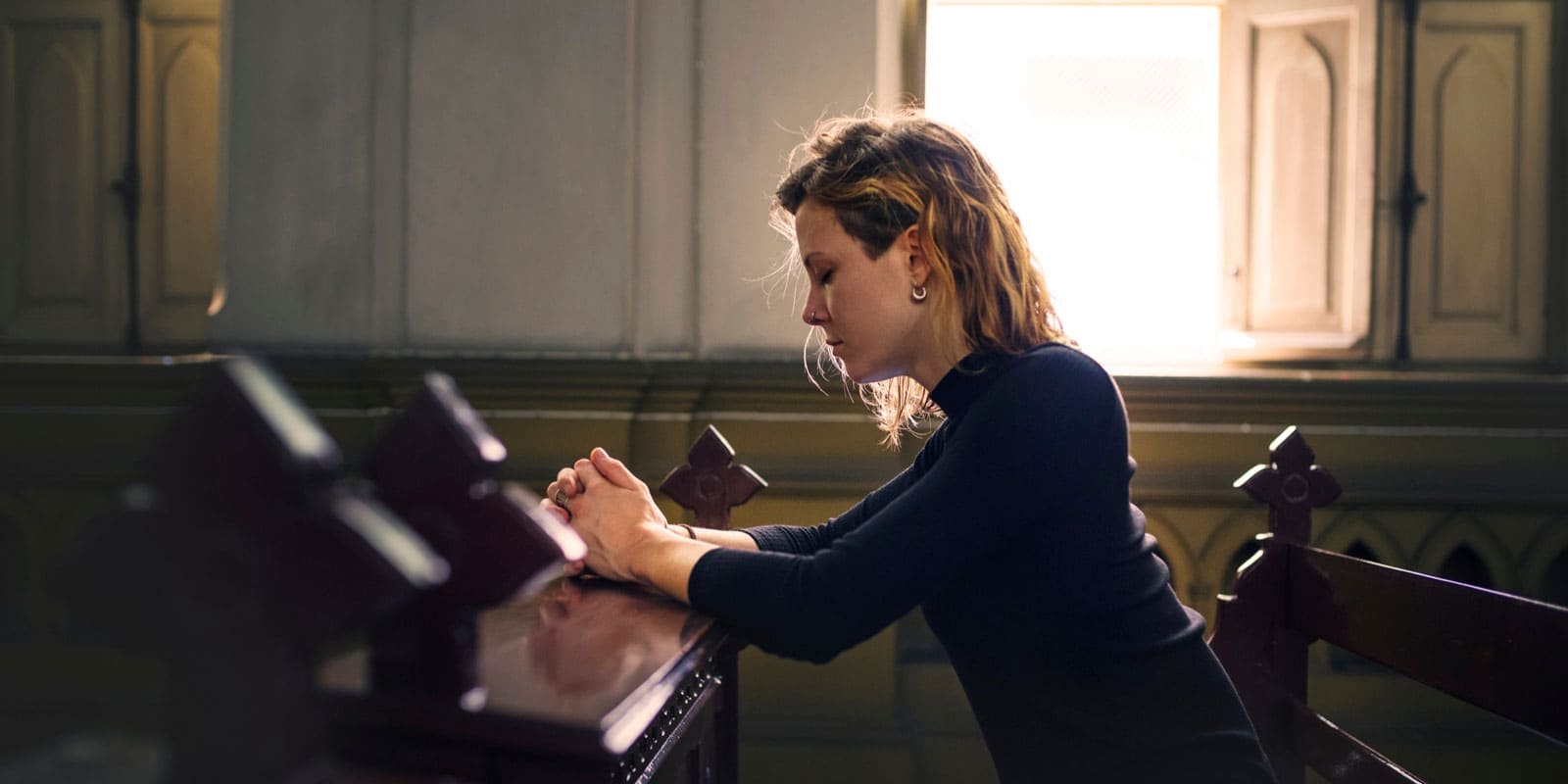
Second, it means we must look at our hearts. If we are temples of God, what condition is the temple in? Is my heart a place where God is welcomed, honoured, and loved? Or is it cluttered, like the Temple in today’s Gospel, with noise, distraction, anger, pride, or selfishness? Jesus did not cleanse the Temple out of anger alone. He cleansed it because it was meant to be holy. He wants to purify our hearts, too. Not to shame us, but to free us. Every time we pray, forgive, love, show patience, receive the sacraments, try again after failure, or return to God after sin, Christ is clearing space in our hearts for grace.
Third, just as the water flowed out of the Temple in Ezekiel’s vision, the love of God in us is meant to flow outward. We are not temples to keep God to ourselves. We are meant to bring life to others. When we show kindness, offer a listening ear, stand up for someone who is mistreated, speak words that heal rather than harm, or choose compassion when it is hard, God’s life flows out into the world through us.
Finally, this feast calls us to unity. We are not Catholics alone. We are Catholics together. Our parish is one part of a worldwide family. Even when we differ, even when we struggle, even when we are hurt or confused, we remember that Christ prayed for us to be one. Unity does not mean we are the same. It means we remain connected in love.
So today, as we celebrate the Dedication of the Lateran Basilica, we remember: Christ is the true Temple. We are members of his Body. God dwells in us. And we are called to let his life flow into the world. May we be living temples of grace, places where God is honoured and where others can find hope and life. Amen.