Wisdom 9:13-18b, Psalm 90 (89):3-6, 12-14, 17, Philemon 9b-10, 12-17 and Luke 14:25-33
Counting the Cost of Discipleship
My dear brothers and sisters in Christ,
Last Sunday, we reflected on the virtue of humility. From the book of Sirach and from the words of Jesus at the banquet, we were reminded that those who exalt themselves will be humbled, but those who humble themselves will be exalted. We saw that humility is not weakness, but rather a strength—the kind of strength that allows us to make room for God and for others. Humility helps us to live joyfully, not competing for honour, but receiving grace as a gift.
Today, the Word of God takes us a step further. If humility is the doorway into the kingdom, then discipleship is the road we must walk once we enter. And Jesus tells us today, in unambiguous terms, that following Him has a cost. It is not cheap, it is not half-hearted, and it cannot be done by convenience.
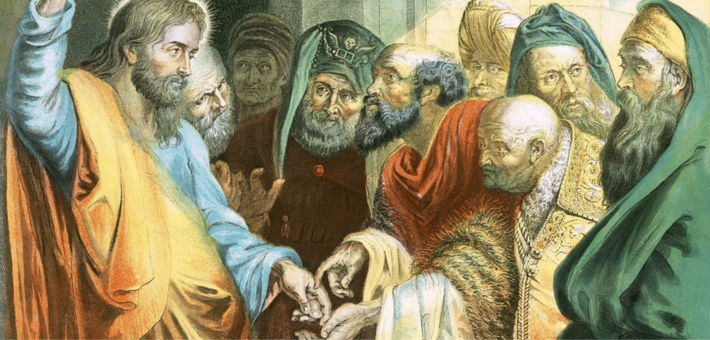
In the Gospel of Luke, Jesus is surrounded by a great crowd. Many were following Him, perhaps attracted by His miracles, His wisdom, or even the possibility of a political saviour. But Jesus stops and speaks with a bluntness that might even shock us: “If anyone comes to me without hating his father and mother, wife and children, brothers and sisters—yes, and even his own life—he cannot be my disciple. Whoever does not carry his cross and follow me cannot be my disciple.”
Now, we know that Jesus is not telling us to despise our families. The same Lord who taught us to love even our enemies cannot contradict Himself. Instead, what He is saying is this: our love for Him must come first, above every other love, even above the deepest natural bonds of family. Only then can we truly love our families and our neighbours as God intends. If God is not first, everything else falls out of place.
Jesus then gives two images—a man building a tower and a king going to war. Both must calculate carefully before acting; otherwise, they will fail. And so it is with us: discipleship is not an emotional rush; it is a lifelong commitment. It is not just saying, “I will follow You, Lord,” but actually counting the cost and being willing to give up all that competes with Him.
This is a hard saying. And yet, we cannot water it down. To follow Jesus is to carry a cross. The cross is not simply a burden, like a difficult neighbour or a heavy workload. No, the cross is the place of surrender, of dying to self, of letting go of pride, comfort, and control. To carry the cross is to put Christ at the very centre of life, even when it costs us dearly.
The first reading from the Book of Wisdom helps us here. It reminds us of the limits of human understanding. “Who can learn the counsel of God? Or who can discern what the Lord wills?” Left to ourselves, we are often too weighed down by earthly concerns. But God, in His mercy, gives us His Spirit. It is by the guidance of the Holy Spirit that we can know God’s will and have the courage to live it. Without Him, we could never embrace the radical call of Jesus.
St. Paul, in his letter to Philemon, gives us a clear picture of what discipleship looks like. He appeals to Philemon to receive Onesimus, a runaway slave, no longer as an enslaved person but as a brother in Christ. Here is the cost of discipleship—letting go of social status, economic advantage, and personal pride, to live out the radical equality and fraternity that the Gospel demands. For Philemon, this was no small thing; it could disrupt his household, his reputation, even his livelihood. Yet Paul insists that true discipleship means seeing others in Christ.
My dear friends, what does this mean for us today? To be a disciple of Jesus is not simply to admire Him, but to follow Him. It means being willing to let go of what holds us back—whether that be wealth, ambition, resentment, or even the fear of what others might say. It means asking, “Am I willing to place Christ first, above all else?”
Think of Abraham, who left his homeland for a promise he had not yet seen. Think of Mary, who said yes to God’s will, not knowing what sorrows it would bring. Think of the apostles, who left their nets, their families, and their security to walk with Jesus. Each of them had to count the cost, and yet they discovered that what they gave up was nothing compared to the treasure they received.
So, brothers and sisters, today’s message is not meant to frighten us, but to free us. Jesus wants us to be honest about the demands of discipleship, so that we do not begin the journey half-prepared. He calls us to love Him above all, not because He wants to deprive us, but because only in Him do we find the strength to love others rightly, to face suffering with hope, and to walk the road that leads to eternal life.
Let us, then, ask ourselves: what towers am I trying to build without first placing Christ as the foundation? What battles am I fighting without first seeking His strength? What attachments keep me from fully following Him? As we approach this altar today, let us offer our lives anew to Christ, asking for the grace to carry our cross with faith and to discover, even in sacrifice, the joy and freedom that come with being His disciple. Amen.