2 Kings 5:14-17, Psalm 98(97):1-4, 2 Timothy 2:8-13 and Luke 17:11-19
Gratitude: The Faith that Heals and Saves
Last Sunday, we heard the disciples cry out to Jesus, “Increase our faith!” (Luke 17:5-10). Jesus responded not by giving them more faith, but by reminding them that even faith as small as a mustard seed can move mountains. The message was simple: faith is not about quantity, but about trust and obedience. True faith is shown not in words but in humble service and steadfast belief that God is at work in our lives.
Today’s Gospel takes us one step further. Faith does not only move us toward obedience; it moves us toward gratitude. The story of the ten lepers invites us to reflect on what it means to live with faith that not only asks and obeys but also remembers to give thanks.
The Setting: Ten Lepers and One Grateful Heart
As Jesus continues His journey to Jerusalem, He travels along the border between Samaria and Galilee. This boundary is significant—it’s a place between the known and the outcast, between insiders and outsiders. There, he meets ten lepers who, standing at a distance, cry out: “Jesus, Master, have mercy on us!”
Let’s give it a context. In the Old Testament, leprosy was one of the most dreaded conditions. It wasn’t just a physical illness—it carried profound social and spiritual consequences. According to the Law (Leviticus 13–14), anyone diagnosed with leprosy was declared unclean. They were banished from family and community, forced to live in isolation. They had to tear their clothes, cover their mouths, and shout “Unclean!” whenever people approached them towards their direction. It was a life of deep loneliness, pain, and shame.
But beyond the physical disease, leprosy became a symbol of sin and spiritual impurity. It represented what happens when the soul is separated from God. In this sense, the healing of a leper was more than a cure—it was a restoration of one’s entire being: body, soul, and community.
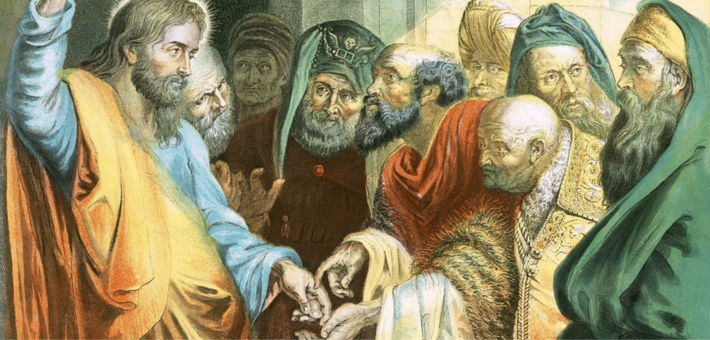
When Jesus saw the ten lepers, He did not touch them or say, “You are healed.” Instead, He told them, “Go and show yourselves to the priests.” This was the prescribed ritual in the Law; only the priest could declare a leper clean and allow him to rejoin society. What’s remarkable is that they went even before they were healed. They trusted His word. And as they went, they were cleansed.
But the heart of the story lies in what follows. Only one—just one—turned back. He praised God in a loud voice, fell at Jesus’ feet, and thanked Him. And St. Luke makes sure we notice: “He was a Samaritan.”
Faith that Returns to Give Thanks
The other nine did nothing wrong—they obeyed, they were healed, they followed the law. But the Samaritan saw something more profound. He saw not just a healer, but the Giver Himself. He recognised in Jesus not merely a channel of blessing, but the very presence of God. Gratitude became the bridge between his healing and his salvation.
Jesus’ final words are revealing: “Were not ten made clean? But the other nine, where are they?” Then to the Samaritan, He says, “Rise and go; your faith has saved you.” Notice the shift—from being cleansed to being saved. The other nine received physical healing, but this one received wholeness of soul. His gratitude completed his faith.
Gratitude is more than good manners; it is a sign of faith. It recognises that everything we possess and everything we are is a gift. Gratitude keeps our hearts humble and open before God. Without it, even blessings can cause us to become entitled or forgetful.
Naaman and the Power of Humble Faith
Our first reading from 2 Kings (5:14–17) reflects this same pattern. Naaman, a foreigner and commander of the Syrian army, travelled to Israel to seek healing for his leprosy. At first, he hesitated at Elisha’s simple instruction to wash in the Jordan River. It seemed too ordinary for a man of his rank. But when he finally humbled himself and obeyed, he was healed. Like the Samaritan, he returned to give thanks, confessing that there is no god but the God of Israel.
Both Naaman and the Samaritans are outsiders—foreigners, people who did not belong to the “chosen” people of God. Yet they are the ones who recognised grace when it arrived. Scripture often illustrates this pattern: sometimes those who are far from God’s promises are the first to see them fulfilled.
This should remind us that gratitude and faith know no boundaries. God’s mercy reaches beyond nationality, religion, or status. What he looks for is the heart that believes, obeys, and gives thanks.
Paul’s Testimony: Faith That Endures
In the second reading, St. Paul writes from prison, urging Timothy to remain steadfast: “If we have died with Him, we shall also live with Him; if we persevere, we shall also reign with Him.” Paul reminds us that faith is not about avoiding suffering but enduring it with Christ. Gratitude and faith often bloom in the soil of hardship.
Like Naaman and the Samaritan, Paul knows what it means to encounter grace in unexpected places. His chains do not silence his thanksgiving; they strengthen it. He has learned that gratitude is not a feeling that comes when life is easy—it is a conviction that God is faithful, even in pain.
Lessons for Us Today
- Faith Begins with Trust: Like the ten lepers, we are called to act in faith even before we see results. Sometimes healing comes “as we go,” in the journey of obedience.
- Gratitude Completes Faith: Many people remember to pray when in need, but few return to give thanks when God answers. True faith doesn’t end with receiving; it turns back to praise.
- Grace Knows No Boundaries: God’s mercy reaches beyond all barriers—race, religion, reputation. He looks for humble hearts, not perfect pedigrees.
- Healing Is More Than Physical: The Samaritan was not only cleansed but saved. Jesus desires to heal us fully—to restore our souls, our relationships, and our joy.
- Gratitude Leads to Worship: The Samaritan’s thanksgiving moved him to fall at Jesus’ feet. Gratitude draws us closer to God. When we thank Him, we acknowledge His presence and power in our lives.
A Call to Remember and Return
As we reflect today, let us ask: which of the ten are we? Do we move on quickly after receiving God’s blessings, or do we return to give thanks? In our prayers, is our first instinct to ask or to adore?
In a world where gratitude is frequently overlooked, we rush from one need to another, from one blessing to the next, without pausing to acknowledge the Giver. However, faith that lacks thankfulness quickly becomes empty.
Today, Jesus is inviting us to be like the Samaritan—to return, to fall at His feet, and to say from our hearts: “Thank you, Lord.”
When we live in gratitude, we live in grace. Gratitude heals our pride, opens our eyes to God’s goodness, and transforms our ordinary moments into acts of worship. May we, like that one grateful leper, hear Jesus say to us: “Rise and go; your faith has saved you.”