Isaiah 22:15, 19-23, Psalm 138 (137):1-3, 6-8, Romans 11:33-36 & Matthew 16:13-20
But who do you say that I am?” Knowing Jesus and entrusting ourselves to him
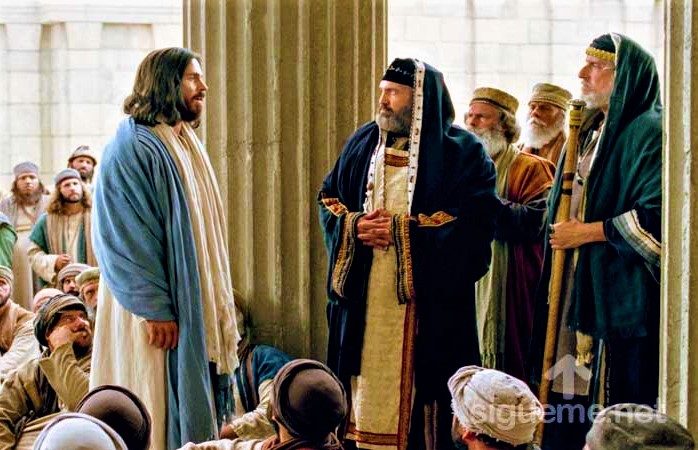
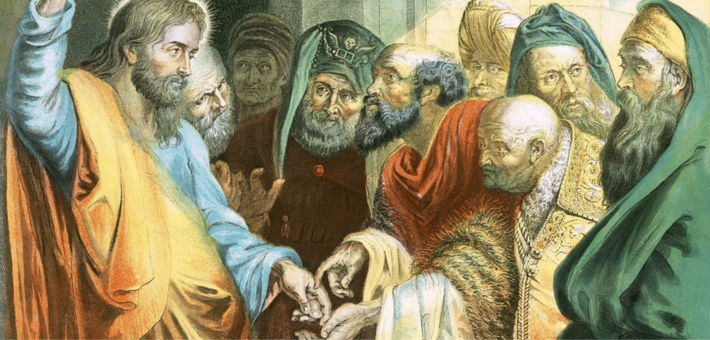
Brothers and sisters, imagine standing before someone whom everyone thinks they know. Some say he is a good man. Others say he is a prophet. Some admire him; others criticise him. Everyone has an opinion. Then that person looks directly at you and asks: “But you, who do you say that I am?” That question changes everything. It is not a question about information. It is a question about relationship. It is a question about faith. And today Jesus asks it of his disciples, and he asks it of us.
St. Matthew tells us that Jesus and his disciples came to the region of Caesarea Philippi, a Gentile city north of Galilee, associated with pagan worship. In that setting, Jesus first asks, “Who do people say that the Son of Man is?” The disciples give the popular answers: John the Baptist, Elijah, Jeremiah, or one of the prophets. These answers are significant. They show that people recognised something extraordinary in Jesus, yet they still had not understood who he truly was. So Jesus makes the question personal: “But who do you say that I am?” Peter answers: “You are the Christ, the Son of the living God.” This is the heart of today’s Gospel. Jesus was not conducting a survey among his disciples. He already knew what people were saying. He was leading the disciples from public opinion to personal faith. It is possible to know what others say about Jesus and still not know Jesus.
We can know the prayers. We can know the doctrines. We can attend Mass. But eventually Christ puts the question before each of us personally: “Who am I to you?” Peter’s answer is remarkable because “Christ” means the Anointed One, the Messiah, the one awaited in Israel. The Old Testament prepared God’s people for this hope. God promised David that his royal line would endure (2 Samuel 7). Isaiah spoke of the promised ruler from David’s line and of God’s saving work. The prophets continually directed Israel towards God’s coming salvation. Peter now declares that this hope has reached its fulfilment in Jesus. Jesus said to Peter: “Blessed are you, Simon son of Jonah. For flesh and blood has not revealed this to you, but my heavenly Father.”
Faith, as we know it, is a supernatural gift from God. Peter has received a revelation, yet his faith still needs to mature. In the verses immediately following today’s Gospel, Peter will struggle to understand Jesus’ suffering and even resist the path of the cross. So today’s Gospel is not about a perfect Peter. It is about God’s grace working through a disciple still being formed. Then Jesus says: “You are Peter, and upon this rock I will build my church.” He gives Peter the keys of the kingdom and speaks of binding and loosing.
In today’s first reading, the prophet Isaiah is particularly prominent in relation to today’s Gospel. Isaiah describes Shebna, the master of the palace, being removed from office and Eliakim being appointed in his place. God says of Eliakim: “I will place the key of the House of David on his shoulder.” The key symbolises the authority entrusted to the royal household.
Matthew deliberately echoes the language used when Jesus gives Peter the keys of the kingdom. The connection is not that Peter becomes another Christ. Rather, Jesus, the Messiah and true King, entrusts Peter with a specific responsibility in his kingdom. The ultimate authority remains Christ’s. Revelation itself applies the imagery of the “key of David” directly to the risen Christ. What kind of authority is this? Not authority for pride. Not authority for domination. It is authority for service, faithfulness and responsibility.
For example, St. Maximilian Kolbe was imprisoned in Auschwitz. When a prisoner was selected to die in the starvation bunker for an escape attempt, Kolbe stepped forward and offered to take his place because the condemned man was a husband and father. Kolbe died there, giving himself for another. Why does such a story move us? Because genuine love makes visible what words alone cannot explain. Jesus is greater still. He does not merely speak of sacrificial love. He gives himself. He is the Messiah who walks towards the cross. He is the Son of the living God who comes not to destroy sinners but to save them.
The words of the Apostle Paul in Romans offer our humble acknowledgement: “Oh, the depth of the riches and wisdom and knowledge of God!” While we cannot fully understand God, we can trust Him. Today, Jesus asks each of us personally, not the person next to us, not what society says, nor what we hear on television or the internet, “Who do you say that I am?” If Jesus is only a teacher, we might admire Him. If He’s only a prophet, we might listen to Him. But if Jesus is the Christ, the Son of the living God, we are called to follow Him. This is the choice before us today. Lord Jesus, You are the Christ, the Son of the living God. Help us not only to know about You but to truly know, trust, follow, and dedicate our lives to You. Amen.