Sirach 15:15-20, 1 Corinthians 2:6-10 and Matthew 5:17-37
The Law Fulfilled in the Heart
Today’s readings invite us to move from surface religion to deep discipleship — from simply obeying rules to becoming people whose hearts are transformed by God’s wisdom. The message running through all three readings is clear: God does not want mere compliance; God desires conversion from within.
In the first reading from the book of Sirach, we hear a powerful affirmation of human freedom: “If you choose, you can keep the commandments.” This wisdom text was written about two centuries before Christ, at a time when Jewish culture was strongly influenced by Greek culture. Many people were tempted to abandon Israel’s traditions in favour of more fashionable philosophies. The author of Sirach responded by insisting that God’s law is not a burden but a path to life.
The author rejects the idea that people sin because God wills it or because fate controls them. Instead, he emphasises that God puts before us fire and water — life and death — and encourages us to choose. This is important background. Ancient cultures often blamed the gods for human wrongdoing. The author of Sirach insists on personal responsibility. God respects human freedom. Love cannot be forced; it must be chosen.
This reading also challenges a modern tendency. Today, we sometimes dismiss moral choices by saying, “That’s just how I am,” or “Everyone does it.” Sirach reminds us that our choices are important. Holiness begins with deciding, again and again, to choose what leads to life.
In the second reading, Saint Paul writes to the divided Christian community in Corinth, as recorded in the First Epistle to the Corinthians. Corinth was a wealthy and sophisticated city, proud of its philosophy and rhetoric. Many Christians there believed that wisdom meant intellectual brilliance or social status. Paul overturns this idea. He asserts that true wisdom is not human cleverness, but God’s hidden plan revealed through the Spirit.
This wisdom is not immediately obvious because it is revealed in humility, in the cross, and in love. St. Paul reminds us that faith is not just about knowing rules or doctrines; it is about allowing the Spirit to shape how we see the world. Without that inner transformation, religion becomes external and empty.
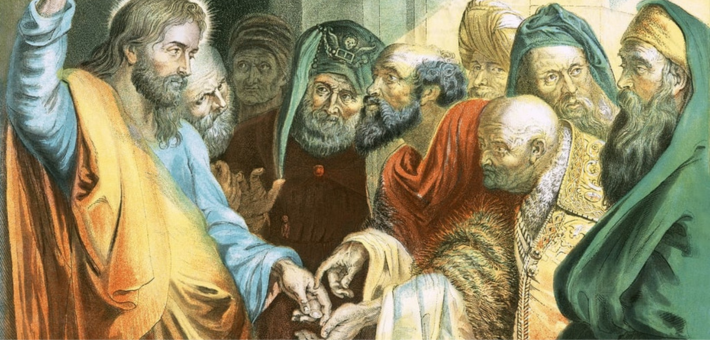
In today’s Gospel, Jesus Christ speaks words that may sound demanding, even shocking. He says he has not come to abolish the law but to fulfil it. And then he deepens the commandments: not only shall you not kill, but do not let anger rule your heart; not only avoid adultery, but purify your intentions; let your “yes” mean yes.
To understand this, we must remember the context. Many religious leaders of the time focused on external observance — keeping the letter of the law. Jesus goes deeper. He addresses the root of sin, which lies in the human heart. Violence begins with anger. Infidelity begins with desire unchecked. Dishonesty begins when truth becomes negotiable.
Jesus is not making the law harder; he is revealing its true purpose. The commandments were never meant to be minimum requirements but guides toward becoming people capable of love. The law fulfilled is love lived from within.
This has very contemporary relevance. Consider how easily anger spreads today — on social media, in political debates, even within families. We may never physically harm someone, yet words can wound deeply. Jesus invites us to reconciliation before resentment takes root. Or think about honesty. In a culture where exaggeration and half-truths are common, simply being trustworthy becomes a powerful witness.
The common thread in all three readings is interior freedom. Sirach tells us we can choose life. Paul tells us the Spirit reveals true wisdom. Jesus tells us holiness begins in the heart. Christianity is not about managing appearances but about transformation.
And this transformation is gradual. None of us perfectly live these teachings. That is why the Gospel is good news. God does not merely command; God offers grace. The Spirit helps us grow beyond anger into forgiveness, beyond selfish desire into faithful love, beyond manipulation into truthfulness.
Perhaps the question for us this week is simple: where is God calling me to go deeper? Is there a relationship in need of reconciliation? A way of speaking that causes harm rather than healing? A place where I settle for doing the minimum instead of choosing love?
The world often asks, “What is the least I must do?” Jesus asks, “How can you love more fully?” When the law moves from the page into the heart, faith becomes not a burden but a freedom — the freedom to live as God created us to live.
May we seek that wisdom today: the courage to choose life, the openness to the Spirit’s guidance, and the grace to let God’s law be written not only in our actions but in our hearts.