Jeremiah 20:7-9, Romans 12:1-2, Matthew 16:21-27
The Cross We Carry, the Love We Become
My dear brothers and sisters in Christ, there is something in all of us that loves a shortcut. We want the fastest route, the easiest solution, the least painful way forward. If there is a way to lose weight without changing our habits, we will look for it. If there is a way to become successful without sacrifice, we are interested. If there is a difficult conversation we need to have, we sometimes postpone it. If forgiveness is painful, we may tell ourselves, “I will forgive eventually.”
We live in a world that constantly whispers: “Avoid the hard road. Choose comfort. Protect yourself. Look for the easier way.” In today’s Gospel, Jesus says something very different: “Whoever wishes to come after me must deny himself, take up his cross, and follow me.” That is not exactly the message of a comfortable world. But the surprising thing about Christianity is this: Jesus does not call us to suffering for its own sake. He calls us to love, and He tells us honestly that real love will sometimes cost us something. This is the theme I would like us to carry with us today: The way of the Cross is the way of love; and every day, God invites us to turn our ordinary sacrifices into an offering of love.
In today’s first reading, the prophet Jeremiah is having a difficult day. He has been faithful to God. He has preached God’s word to the people of his time. He has tried to do what God asked of him. And what has he received in return? Opposition, rejection, ridicule, and suffering. So Jeremiah cries out to God: “You duped me, O LORD, and I let myself be duped.” These are strong words. Jeremiah is not pretending that everything is fine. He is not putting on a religious smile and saying, “Praise God, everything is wonderful.” He is hurting. Yet even in his frustration, Jeremiah cannot walk away from God. He says that God’s word becomes “like a fire burning in my heart, imprisoned in my bones.” He wants to stop speaking. He wants to give up. But he cannot. Why? Because God’s love has taken hold of him. Something very important is at stake here. Faith does not mean we never grow tired. It does not mean we never question, struggle, or feel discouraged. Even a faithful servant of God can say, “Lord, this is difficult. I don’t understand. I am tired.” But faith means our struggle does not have the final word. The fire of God’s love can remain alive even when we feel exhausted.
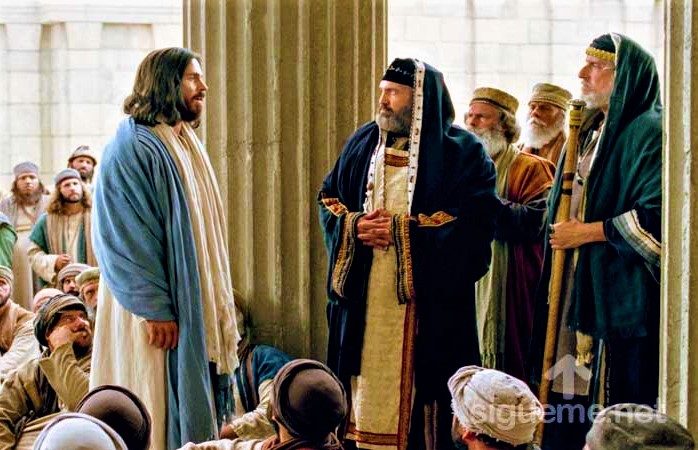
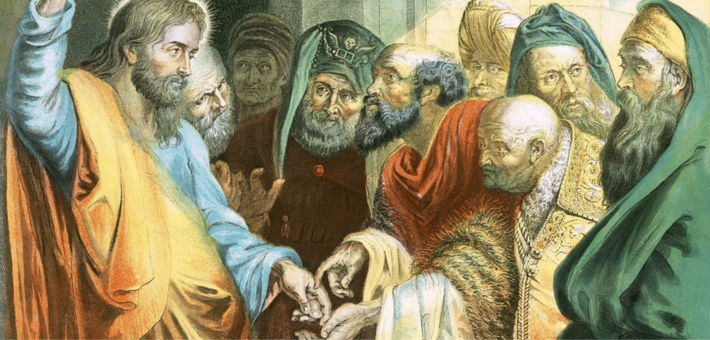
In the Gospel, Jesus begins to explain to His disciples what lies ahead. He tells them plainly that He must go to Jerusalem, suffer, be killed, and be raised on the third day. Peter cannot accept it. Peter loves Jesus and wants to protect Him. Perhaps Peter thinks he is being courageous or faithful. So Peter says: “God forbid, Lord! No such thing shall ever happen to you.” Jesus turns to him and says: “Get behind me, Satan! You are an obstacle to me.” These are among the strongest words Jesus ever speaks to one of His disciples. Why such a severe response? Because Peter is tempting Jesus with something that sounds very reasonable: “You can have the glory without the Cross.” Peter wants the Messiah, but not the suffering Messiah. He wants victory without sacrifice. And Jesus knows this is not God’s way. So, He said: “You are thinking not as God does, but as human beings do.” That sentence is central to today’s Gospel. “You are thinking not as God does, but as human beings do.” Peter is thinking according to the logic of the world: avoid suffering, protect yourself, take the easier road. Jesus is thinking according to the logic of the Father: love even when love costs something; remain faithful even when faithfulness is difficult; give yourself rather than always asking, “What do I get?”
And Jesus then said: “Whoever wishes to come after me must deny himself, take up his cross, and follow me.” Notice that Jesus does not say, “Go looking for suffering.” The Christian life is not about deliberately making ourselves miserable. The Cross signifies something deeper. It means that when love asks something difficult of us, we choose love. That is where St Paul helps us understand today’s Gospel. In the Letter to the Romans, Paul says: “Offer your bodies as a living sacrifice, holy and pleasing to God.” A living sacrifice. This is a beautiful expression. In the Old Testament, a sacrifice was something placed on the altar and offered to God. St Paul takes that image and says: Your whole life can become an altar.
Your Monday morning can be an offering. Your family life can be an offering. Your workplace can be an offering. Your tiredness can be an offering. Your patience can be an offering. Your forgiveness can be an offering. You don’t have to wait for a dramatic moment to become a saint. Most of us will not be asked to die a martyr’s death. But each of us is given hundreds of small opportunities to die to ourselves so that love can live. That is the Cross. The Cross can look like a husband choosing patience over anger. It can look like a wife choosing to forgive rather than keep score. It can look like a parent getting up for the child one more time, even when already exhausted. It can look like caring for an elderly parent when life would be easier without that responsibility. It can look like a teenager resisting the pressure to follow the crowd. It can look like refusing to cheat at work when everyone else says, “That’s just how business is done.” It can mean telling the truth when a lie would be more convenient. It can mean apologising first, even when we think the other person is more at fault. It can mean praying for someone who has hurt us. It can mean continuing to do good when nobody notices. These things may seem small, but heaven does not measure love by how impressive it looks. God sees the heart. A cup of tea made with love. A difficult conversation handled with gentleness. A hidden act of generosity. A prayer offered when we don’t feel like praying. A decision to forgive one more time.
These can become living sacrifices. This is why St Paul said: “Do not conform yourselves to this age but be transformed by the renewal of your mind.” In other words, don’t let the world teach you what is most important. Let God teach you. The world says, “Look after yourself first.” Jesus says, “Give yourself in love.” The world says, “Get even.” Jesus says, “Forgive.” The world says, “Take the easy road.” Jesus says, “Follow me.” The world says, “Your value depends on what you possess, what people think of you, or how successful you appear.” Jesus says: “What profit would there be for one to gain the whole world and forfeit his life?” And here is the great paradox of the Gospel: When we give ourselves away in love, we do not lose ourselves. We discover who we truly are. Jesus says, “Whoever loses his life for my sake will find it.” That is the promise. The Cross is not the end. The Cross leads to Resurrection. Jeremiah feels the fire burning within him. Paul calls us to offer ourselves as living sacrifices.
Jesus calls us to take up our Cross. All three readings tell us the same thing: Don’t run away from the love that costs you something. Sometimes the very thing we want to avoid is where God wants to transform us. Perhaps this week your Cross will be a difficult person. Perhaps it will be patience with someone in your family. Perhaps it will be forgiving someone. Perhaps it will be doing your work honestly when no one would know if you took a shortcut. Perhaps it will simply be remaining faithful when prayer feels dry and God seems silent. Whatever it is, don’t ask only, “How can I escape this?” Try asking instead: “Lord, how can I love You here?” That is a very different question. And it changes everything.
My brothers and sisters, we are about to come to this altar to celebrate the greatest sacrifice of love the world has ever known. Jesus does not merely tell us to carry the Cross. He carried it first. He does not merely tell us to give ourselves. He gave Himself completely for us. And now, in the Eucharist, He gives Himself to us again. So, as we approach the altar today, let us bring our own lives with us. Bring the difficult relationship. Bring the worry, the tiredness, the person you struggle to forgive, the unseen sacrifice, the cross you have been carrying, and place them beside the Cross of Christ. Then ask Him for the grace to love as He loves. Perhaps the most important sentence to remember this week is simply this: Don’t ask, “How can I avoid the Cross?” Ask, “How can I love Christ in the Cross before me?” Because the Cross we carry with Christ will never be wasted. God can take our ordinary sacrifices, our hidden struggles, and our acts of patience and forgiveness, and transform them into something beautiful. The fire that burned in Jeremiah can burn in us. The living sacrifice St Paul speaks of can become our daily life. The Cross that seemed like defeat can, in Christ, become the road to Resurrection. So let us follow Him, not the easier road, not the road of comfort at any cost, but the road of love. And may the Lord, who is about to give Himself to us in the Eucharist, grant us the grace to give ourselves back to Him, not just today but in every ordinary moment of the week ahead. For whoever gives his life to Christ in love will never lose it. In Christ, that life will be found. Amen.